
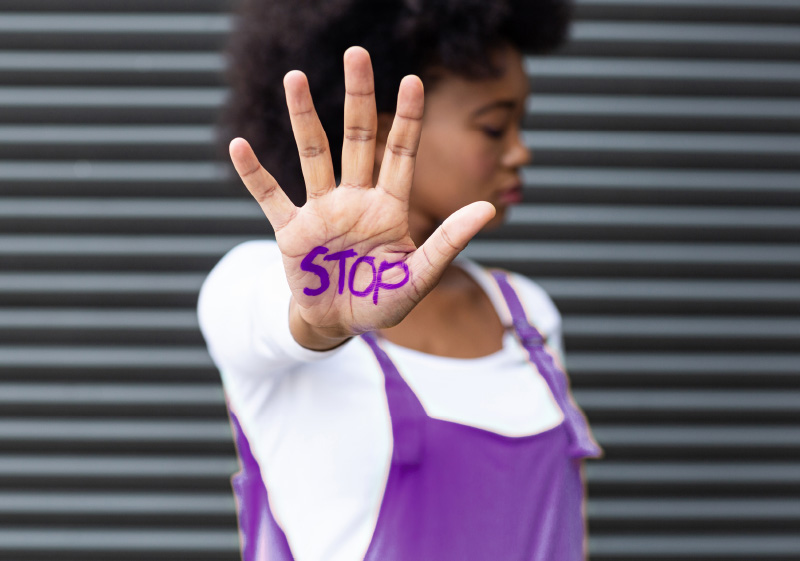
Open the door. Take a stand. End violence.
25 November to 10 December 2025
The 16 Days of Activism for No Violence against Women and Children Campaign (16 Days Campaign) is a United Nations campaign which takes place annually from 25 November (International Day of No Violence against Women) to 10 December (International Human Rights Day).
The 16 Days of Activism for No Violence Against Women and Children Campaign will take place between 25 November and 10 December 2024 under the theme: “30 Years of Advancing Collective Action to End Violence Against Women and Children”. This year’s campaign emphasizes addressing the root causes of GBVF, promoting positive masculinity, promoting gender equity, and creating economic opportunities for women and children. At its core, the theme aims to accelerate and amplify multisectoral and whole-of-society accountability.
Violence against women is a major public health and human rights crisis, affecting almost one in three women in their lifetime. The risks increase even further in contexts of humanitarian crises, climate-vulnerable settings, and poverty. Behind every statistic lies the story of a woman or girl whose health, safety, and rights have been violated.
Yet, violence against women is preventable. Across the world, communities are challenging unequal gender norms, governments are strengthening policies and laws, and health systems are stepping up to provide care and support for survivors.
Key Facts
- Violence against women remains a global crisis, with little change over the past two decades. In the last 12 months alone, 11% ever-partnered women aged 15 years and older experienced physical and/or sexual violence by an intimate partner. Despite decades of commitment, progress remains slow, with only a 0.2% annual decline in prevalence.
- Sexual violence beyond intimate relationships is widespread but highly under-reported. Globally, 8% have experienced sexual violence by someone other than a partner. The true number is likely much higher due to stigma and non-disclosure.
- Violence against women starts early and persists across the life course. Around 16% of adolescent girls (15–19 years) have experienced intimate partner violence in the past 12 months alone, and between 4–5% of older women (60+) have faced it as well, yet these age groups often remain invisible in data and policy responses.
- Violence is preventable, and we now know what works. The second edition of RESPECT Women outlines evidence-based strategies to prevent violence, including strengthening Relationship skills, Empowering women and girls, ensuring Services, reducing Poverty, creating Enabling environments (i.e. in schools, workplaces, public spaces), preventing Child and adolescent abuse, and Transforming unequal gender norms.
What you can do
Raise awareness about violence against women and its long-term health, social and economic consequences.
Be an ally: challenge unequal gender norms, sexist behaviours and comments in your homes, communities, workplaces and with your friends, relatives and colleagues.
Support survivors with empathy, without judgment, to access services and help.
Advocate with governments and donors to finance and invest in evidence-based prevention and response.
Integrate response and prevention services in programmes and services in development and humanitarian contexts, including health, education, social protection, law enforcement, and justice.
For communities
Be an activist against GBV in your homes, communities, work and positions:
- Challenge cultures and practices that perpetuate gender inequalities and consequent abuse of women and children at personal and societal level.
Play your part:
- Reject and report abusers- Act and don’t look away!
- Do not protect abusers, report them!
- Sign the Pledge Against Gender-Based Violence. Do not engage in abusive activities and become an abuser- Stop abuse.
- Challenge and denounce cultural practices that perpetuate gender inequalities
- Be sensitive and supportive to GBV victims – share helpful information and support causes near you.
- Seek personal help to change harmful behaviors such as alcohol and substance abuse
- Teach children values of gender equality
- Protect children from exposure to violence and harmful content on internet and social media, including pornography, sexual solicitation
- Develop policies that prevent and deal with gender-based violence in your sector, workplace and communities.
- Organise targeted community outreach and dialogues on solution towards a gender equal society.
- Together, let us take actions to support the 16 Days of Activism for No Violence Against Women and Children campaign.
If you or a loved one is/has been affected by GBV, contact the EAP provider
Toll Free: 0800 611 189
Source:
16 Days of Activism 2025 | South African Government
16 Days of Activism against Gender-Based Violence 2025

Leave A Comment
You must be logged in to post a comment.